


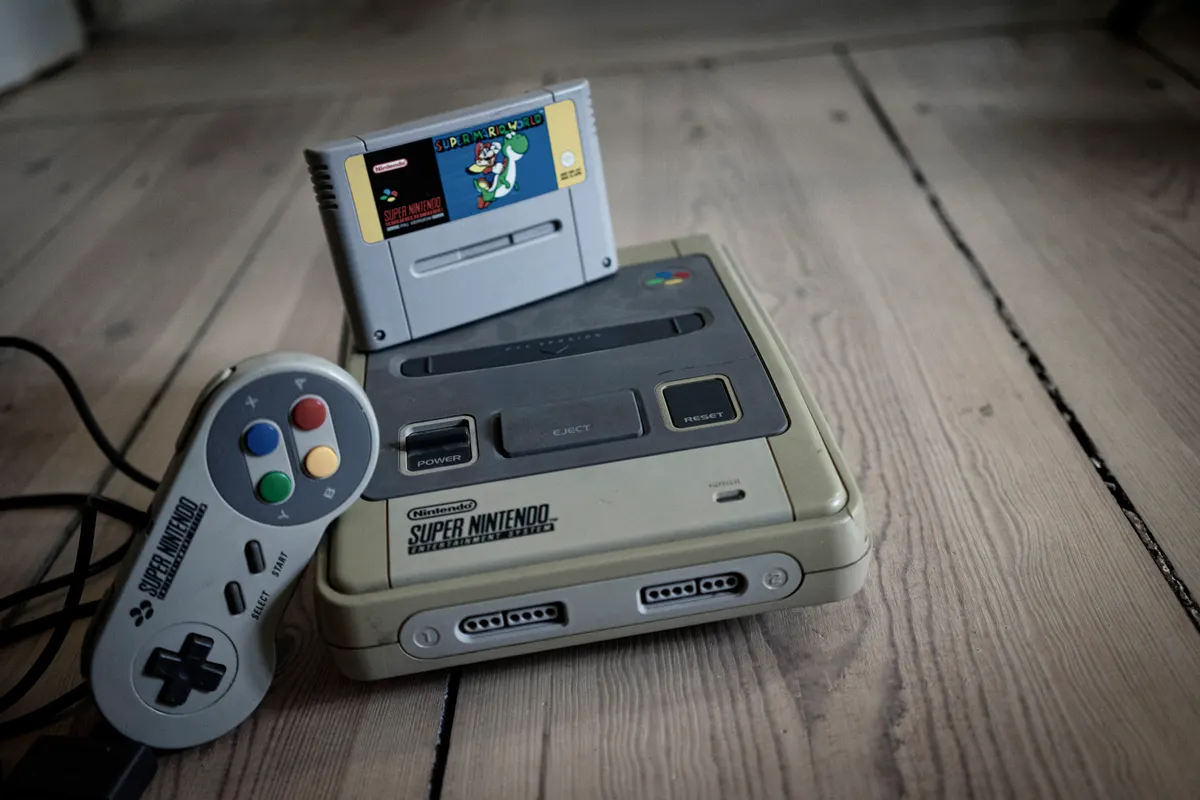
A developer known as Inkbox is building an SNES homebrew assembly game, hand-coding a top-down adventure title directly in the Super Nintendo’s native assembly language and documenting every hardware trick along the way. The project is a proper deep dive: not a ROM hack, not a high-level engine, but original code wrung out of one of Nintendo’s most beloved consoles.
Working Within the SNES Hardware Constraints
The Super Nintendo Entertainment System was never a machine you could be profligate with. Inkbox is working within two 64 kB RAM banks and a 3.58 MHz Ricoh 6502-based CPU, and he has set himself a 4 MB ceiling for the finished cartridge in the interest of keeping things historically accurate. By the standards of anything made in the last two decades, that is a very tight box indeed. It is precisely the kind of constraint that made the original generation of SNES developers into genuine assembly-language craftspeople, and it is the same pressure Inkbox is putting himself under now.
The game he is building takes its cues from top-down adventure titles in the mould of Zelda. Getting that kind of experience out of the SNES hardware means understanding the machine at a register level, and Inkbox clearly does. His nearly hour-long video walks through the architecture in considerable detail, covering everything from the console’s different graphics modes to the specific registers that handle sound. It is, frankly, one of the more thorough public explanations of how the SNES is actually meant to be used, and anyone curious about the platform’s internals would do well to watch it.
An Open-Source Sound Engine Worth Your Attention
What lifts the project beyond a personal challenge is Inkbox’s commitment to sharing his work. The SNES sound engine he has published on GitHub is freely available and looks like a genuine resource for anyone else attempting SNES homebrew. Sound on the Super Nintendo is its own discipline: the console’s Sony SPC700 audio subsystem operates largely independently of the main CPU, and getting music and effects to behave requires careful management. A working, documented sound engine takes a real burden off anyone starting from scratch.
The game itself is already available on itch.io on a pay-what-you-want basis, so you can follow the project’s progress and support it at whatever level you choose. That combination of open-source tooling and an accessible release model is exactly the kind of thing that keeps homebrew scenes healthy.
A Developer Who Knows His Assembly
Inkbox is not limiting himself to the SNES’s 6502-adjacent instruction set. The report of his wider work visible online shows he has also done substantial work in x86 assembly, which suggests this is someone who is genuinely comfortable thinking in the low-level language of processors rather than reaching for higher abstractions. That background likely informs the quality of the SNES project: knowing how a different architecture handles similar problems tends to sharpen your instincts on the machine in front of you.
The SNES homebrew assembly game series already runs to at least two videos, with the previous entry covering ground that the latest builds upon. Taken together they form a practical course in Super Nintendo programming as it was actually practised, taught by someone doing the work in real time rather than reconstructing it from documentation alone.
The source code and the game are both live now. If you have ever wanted to understand why SNES developers talked about mode 7 and sprite priority with such reverence, Nintendo‘s old hardware is waiting, and Inkbox’s work is a remarkably honest guide to what the machine demands of you.
