


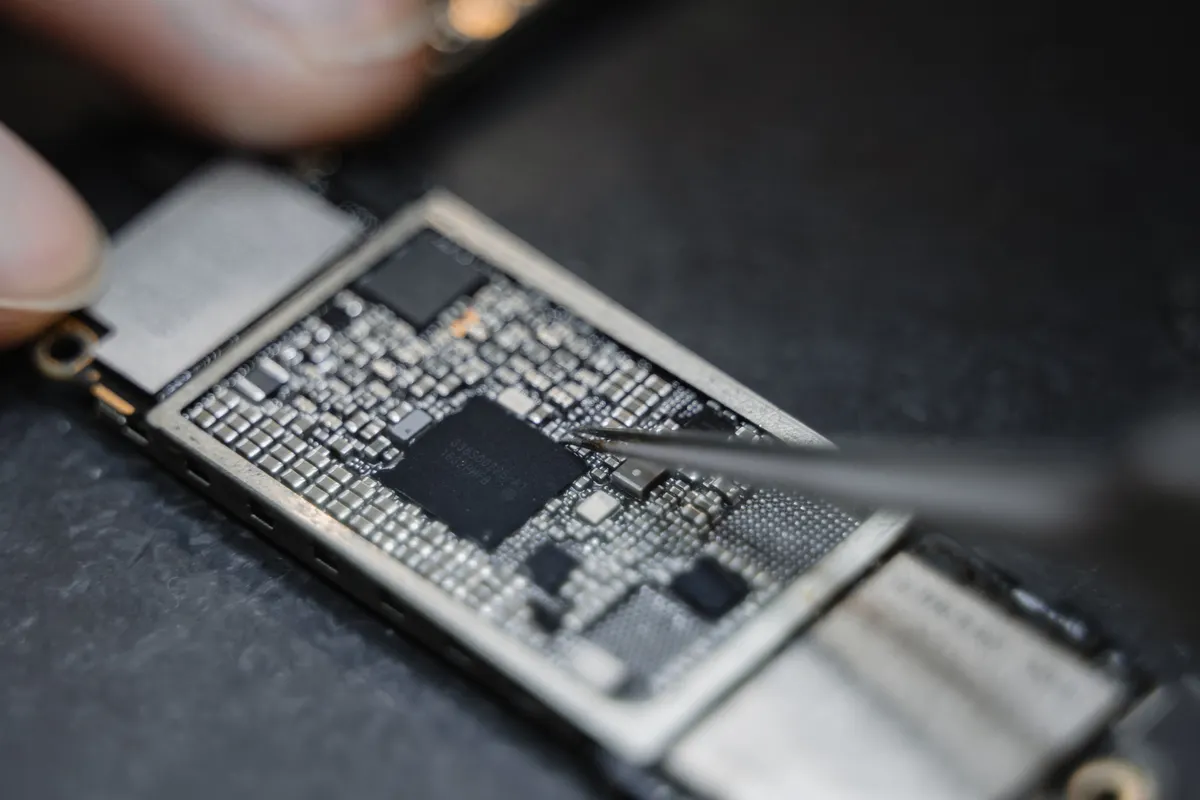
A Tualatin Pentium III repair job has reminded the community just how unforgiving a botched delidding can be, after Hackaday covered the painstaking work carried out by [Bits und Bolts] on a 1.3 GHz chip that arrived with serious substrate damage.
The CPU turned up in an eBay lot in a sorry state. A previous owner had attempted to remove the integrated heat spreader (IHS) and, by all appearances, had resorted to brute force and a prying implement rather than anything resembling finesse. The result: around a dozen tiny traces on the substrate were severed, leaving the processor dead and the substrate looking as though it had lost an argument with a flat-head screwdriver.
Why Delidding Goes Wrong on a Tualatin Pentium III
Delidding exists for a legitimate reason. The IHS sits between the bare silicon die and whatever heatsink you bolt on top, adding an extra thermal interface that bleeds cooling efficiency. Pull the IHS cleanly and you can mount a heatsink directly on the die, with better results. The trouble is that the IHS is bonded to the substrate, and if the bond does not give way evenly, the substrate pays the price.
The Tualatin core makes this particularly consequential. Produced on a 130nm process node, the Tualatin had a smaller silicon die compared to the Coppermine generation it succeeded, according to Hackaday. A smaller die on the same substrate means more exposed substrate area around it, and more exposed substrate means more traces sitting close to wherever your prying tool happens to slip. The geometry that made Tualatin a refined, cooler-running design also made careless delidding more destructive.
Once [Bits und Bolts] confirmed the chip was indeed non-functional with those traces cut, the repair work could begin. There is no shortcut here: you have to know which traces are severed and which are merely scuffed before touching anything.
The Trace Repair Process
The approach taken was methodical. Enough soldermask was removed from the damaged area to expose the broken traces and give something to work with. Traces that had survived intact were covered back over with soldermask to protect them from what came next. For the traces that were genuinely gone, the thinnest available copper wire was laid in to bridge the gaps and re-establish the connections the substrate had originally carried.
That description makes it sound straightforward, and with a good microscope and a steady hand it is at least achievable. In practice, working at this scale demands patience most people underestimate. The traces on a late-1990s CPU substrate are not generous, and laying copper wire across severed ones without disturbing neighbouring conductors requires the kind of concentration that makes an hour feel like ten minutes. [Bits und Bolts] managed it, and the repair stands as a good example of what careful rework can accomplish on hardware from this era.
After the wire repairs were in place, the CPU was retested. A Tualatin Pentium III repair of this kind lives or dies on whether every severed trace has been correctly identified and bridged, because a single missed connection will leave the processor just as dead as before. The outcome of testing is not detailed, but the documentation of the process itself is thorough enough to serve as a reference for anyone facing similar damage.
Modern CPUs are a different story entirely. Contemporary substrates pack far more layers and far finer features than anything from the Pentium III generation. Delidding continues to be practised on current Intel and other processors, but a slip of the blade today risks not only severed traces but ripped-off surface-mount capacitors, and the substrate geometries involved put repair well beyond what copper wire and soldermask can address.
That contrast is part of what makes the [Bits und Bolts] project worthwhile beyond the immediate fix. Older substrates, built to tolerances that feel almost generous by present standards, can sometimes be brought back. Tossing a 1.3 GHz Tualatin as e-waste because a previous owner was impatient with a prying tool is, it turns out, not inevitable. Find it on eBay damaged, repair it properly, and the chip still works as designed, which is exactly how things should be.
