


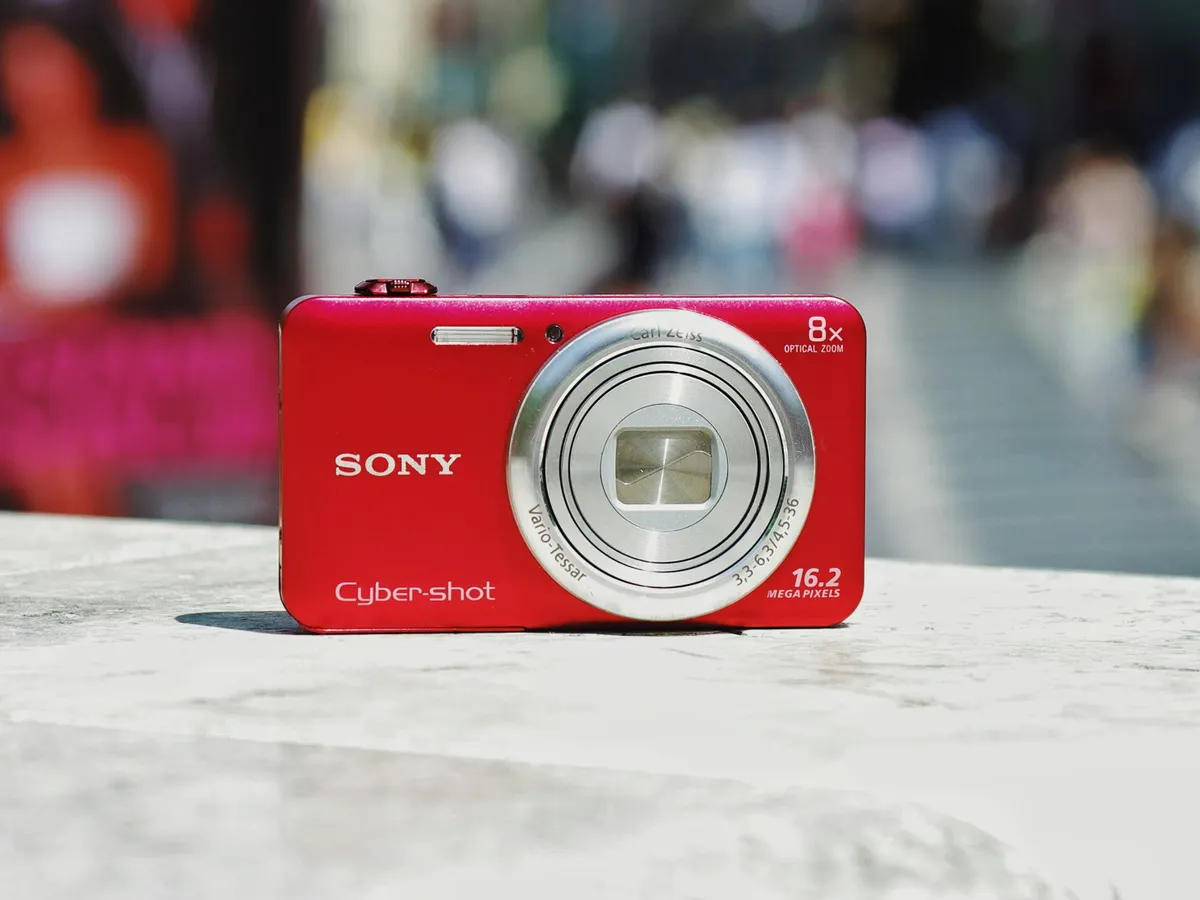
The PolyShot DIY point-and-shoot camera is Arnov Sharma’s answer to the creeping demand for that particular grainy, slightly-too-warm look that old digital compacts produced, and rather than hunt down a dusty example at an inflated price, he built his own from scratch. As Sharma documents on Hackster.io, the PolyShot can capture photos, store them on a microSD card, and preview them on-device, a complete point-and-shoot loop inside a hand-built shell.
What Powers the PolyShot DIY Point-and-Shoot Camera
At the heart of the build sits the Unihiker K10 development board, which carries an Espressif ESP32-S3 microcontroller. That handles the logic, the display, and communication with the camera module, a 2 megapixel unit, which is firmly in the territory of a mid-2000s budget compact. Storage is handled by a micro SD card, slotted in for that authentic card-swapping experience that anyone who owned a digicam in the early 2000s will remember with a mixture of fondness and mild frustration.
Alongside the K10, Sharma designed a custom PCB to bring the whole thing together as a proper handheld device rather than a breadboard tangle. The board is admirably minimal: just three buttons. Shutter, gallery, and next image. That is the full control set, which is either charming in its simplicity or maddening depending on your patience. One incidental design win is the position of the battery compartment, which naturally forms a grip on the body, the kind of ergonomic accident that sometimes works out better than a planned solution.
The Shutter Delay and What Sharma Plans to Fix
If there is one characteristic of the PolyShot that tips it from affectionate homage into genuinely vintage behaviour, it is the shutter lag. There is a few-second delay between pressing the shutter button and the image actually being captured, which is documented in the short videos Sharma posted alongside the project. For static subjects, architectural shots, or the kind of contemplative self-portrait that would look at home on a disposable film camera, this is manageable. For anything that moves quickly, it is a different matter entirely.
Sharma is candid about the gap between original intention and final result. The project evolved away from its starting point and ended up resembling a more traditional digital camera rather than the lo-fi, processing-heavy aesthetic he was originally chasing. Image quality is one area he has flagged for a future iteration.
Battery life currently sits at around three hours on a charge, which puts it in roughly the same ballpark as running a Game Boy Color on a fresh set of AAs, enough for a session, but you would not rely on it for a full day out without a backup plan. Sharma has identified this as another area for improvement in a revised version.
The longer-term ambition is more involved. Sharma wants to move away from the Unihiker K10 entirely and design the hardware from the ground up, retaining the ESP32-S3 as the processor but building a custom module around it. That would give him full control over the PCB layout, power management, and form factor, the difference between assembling from existing building blocks and genuinely engineering a camera. It is a substantial step up in complexity, but it is the kind of project progression that makes sense once you have established that the concept works.
As a first-pass build, the PolyShot DIY point-and-shoot camera demonstrates that the ESP32-S3 is capable enough to drive a real camera workflow (capture, store, preview) on modest hardware. Whether the nostalgic image quality people are apparently seeking from vintage digital compacts can be faithfully recreated on two megapixels and a dev board is a question Sharma will presumably answer in version two, once he has sorted the shutter delay and topped up the battery capacity.
