


Tasmota Apple Home integration has long been a friction point for anyone running Tasmota firmware on their Espressif microcontrollers, but a new app called Tasmoshelf, built by Christof Müller, aims to make the whole process considerably more straightforward.
What Tasmoshelf Actually Does
The app’s central promise is that it can bring a Tasmota-based smart home into the Apple Home ecosystem without the usual scaffolding. No Home Assistant server. No MQTT broker. No elaborate workarounds involving bridging software that takes an afternoon to configure and a weekend to debug.
The reason this is possible at all comes down to Matter, the interoperability standard that Apple Home now supports natively. ESP32 devices running Tasmota 13 or newer can speak Matter directly, which means they can join an Apple Home setup without any intermediary. Tasmoshelf makes that process accessible rather than relying on users to navigate it manually.
Older ESP8266 hardware is where things get a touch more involved. Those chips cannot run Matter themselves (the protocol’s demands exceed what the ESP8266 can comfortably handle) but Tasmoshelf addresses this by allowing a capable ESP32 device to act as a bridge, pulling the older hardware into the Apple Home universe by proxy. If you have a drawer full of ESP8266-based Sonoff switches or similar kit that you flashed years ago and cannot bear to retire, this is genuinely good news.
Network Scanning and the Three-Device Question
Tasmoshelf includes a network scanning feature that will automatically discover Tasmota devices on your local network. Crucially, it will also advise you on how each one can connect: directly via Matter, or through a bridge. For anyone with a mixed bag of ESP32 and ESP8266 devices, that clarity alone is worth something.
There is a cost consideration to factor in. The app is available to try, but a one-off purchase is required if you want to use it with more than three devices. Whether that limit feels generous or restrictive will depend entirely on the scale of your setup. A single-room experiment with a couple of smart sockets sits comfortably within the free tier; a whole-house installation with relays behind every light switch almost certainly does not.
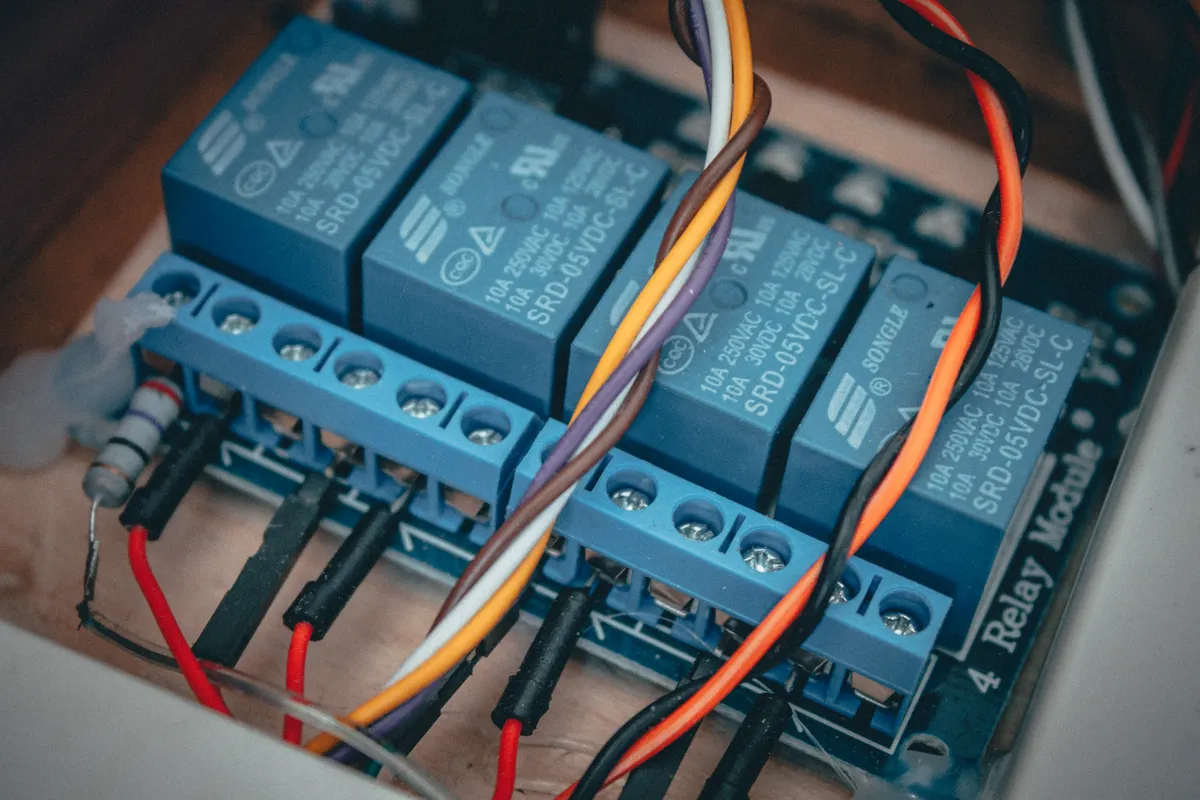
Tasmota itself has been a staple of the DIY smart home scene for years, and it is not hard to see why. The firmware runs on a remarkable breadth of Espressif hardware, it is open source, and it offers local control without any cloud dependency, a quality that has only grown more appealing as various smart home platforms have come and gone or changed their terms of service. Flashing a cheap off-the-shelf relay module and having it report temperature, control a load, and respond to MQTT commands within an hour remains one of the more satisfying things you can do with a soldering iron and a USB-to-serial adapter.
The Apple Home side of this equation has historically been the sticking point. HomeKit, Apple’s previous smart home framework, required manufacturers to go through a certification process that effectively locked out DIY hardware. Matter changes that calculus. Because it is an open standard backed by a broad industry coalition, devices that implement it correctly can talk to Apple Home, Google Home, and Amazon Alexa simultaneously, without waiting for anyone’s approval.
ESP32 devices on Tasmota 13 or newer can join Apple Home natively via Matter, and older ESP8266 devices can be bridged through a compatible ESP32. Tasmoshelf packages both of those capabilities into a single app with automatic discovery, which is a reasonable convenience for anyone who wants their Tasmota Apple Home integration sorted without reading through pages of forum threads. The one-off fee beyond three devices will be the deciding factor for larger installations.
