


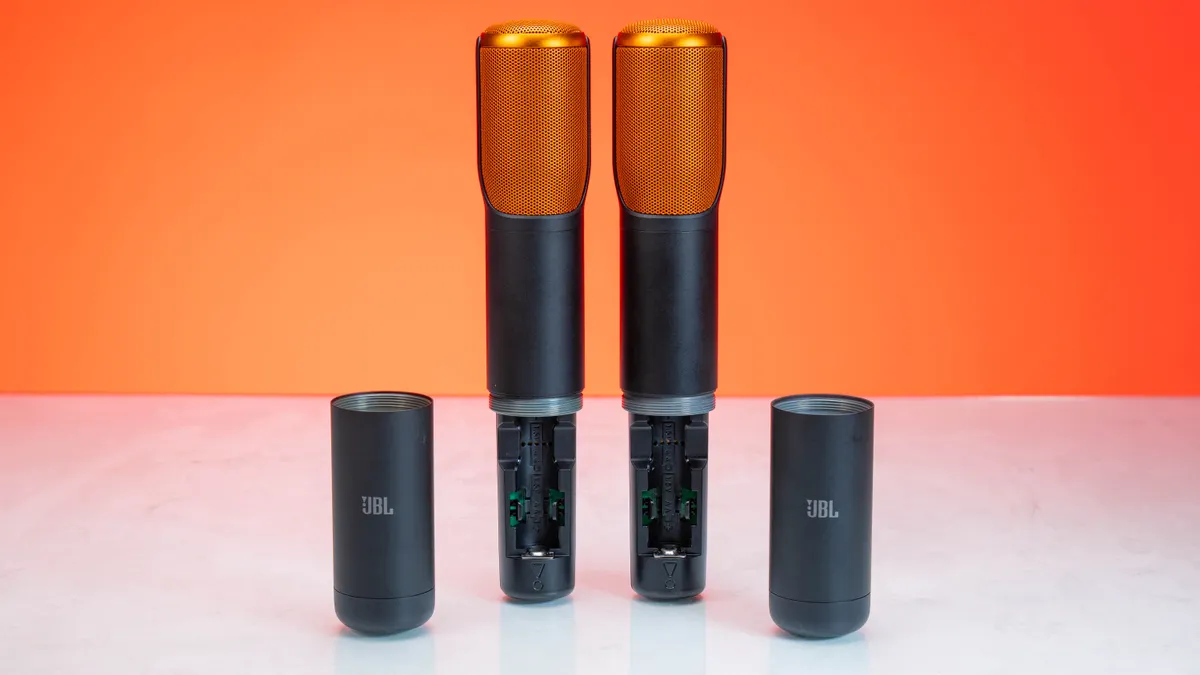
The Teenage Engineering EP-2350 teardown carried out by Sam Holland lays bare a device that looks cheerfully simple on the outside but conceals a level of engineering thought that deserves a proper look. The Ting FX EP-2350 is a standalone microphone with onboard samples and built-in effect presets that the user can modify, wrapped in a deliberately chunky, low-fi shell, and the internals tell a more involved story than the exterior lets on.
What the Teenage Engineering EP-2350 Teardown Reveals Inside
Crack the case and you find a single PCB with a cutout at its centre to accommodate a pair of AAA cells. Driving the whole thing is a Raspberry Pi 2350, with the specific chip identified by Informal’s teardown as the RP2350A0A2. That is a proper, capable processor hiding under what Teenage Engineering are pitching as lo-fi hardware, and it explains how the device manages to run effect presets, handle sampling duties and respond to a multi-sensor lever input all at once.
Holland approaches the teardown primarily as a mechanical engineer, which gives his analysis a different flavour from the usual circuit-level dissection. He pays close attention to how components interact physically, how tolerances are managed, and where the design makes deliberate choices for feel and usability rather than pure cost savings. The result is a critique that is as interested in the lever mechanism as it is in the chip sitting beneath it.
Three Sensors, One Lever: the Cleverest Bit of the EP-2350 Design
The large, spring-loaded side lever is the mechanical highlight. It carries three sensors: two switches and a potentiometer. The first switch detects the moment the lever is depressed by any amount at all, waking the device from sleep the instant a hand touches it. The potentiometer sits at the pivot point and reads exactly how far the lever has been pushed, allowing effects to be dialled in proportionally. The second switch fires when the lever bottoms out completely, giving that satisfying, distinct click its own function as a discrete input.
The result is an input that feels intuitive in use: press lightly to wake and apply a touch of effect, push harder to increase it, and click through to trigger something else entirely. Packing three distinct sensing modes into a single physical gesture, without the user needing to think about which sensor is doing what, is tidy work regardless of the price bracket the device sits in.
Specs That Undercut the Lo-Fi Branding
The performance figures are worth dwelling on. According to Teenage Engineering’s own guide, the EP-2350 offers stereo line output with a signal-to-noise ratio of 98 dBA and a maximum output level of 8 dBu (2 Vrms). Those are not figures you expect from something running on two AAA batteries and wearing a plastic body designed to look like a toy. The device measures 88mm × 56mm × 16mm and weighs 100g, so it genuinely fits in a coat pocket, which makes those output specs all the more respectable.
The lo-fi aesthetic, then, is a deliberate design language rather than a reflection of the underlying hardware. Teenage Engineering have form for this kind of thing: the outer presentation is casual and tactile, while the component choices underneath are chosen to actually do the job.
Light Pipes and a Few Tips Worth Borrowing
Holland also spends time on the light-pipe arrangement that carries light from indicator LEDs to the device’s outer surface. A textured face acts as a diffuser, smoothing out the appearance of the lit area, while a coating of silver paint contains the light within the pipe and probably (his word) maximises transmission through the plastic.
Hot glue turns out to be a workable light-pipe material, and Holland notes that sanding the exit surface and applying a coat of silver paint to the rest of the pipe is a technique worth carrying into your own builds. It is the kind of low-cost construction detail that scales down from commercial production into one-off projects without much fuss, and it is a useful find for anyone who has wrestled with LED bleed on a homebrew enclosure.
The EP-2350 is the sort of product that rewards pulling apart: a clean outer form, a capable processor underneath, and mechanical thinking applied to every user-facing surface. Holland’s teardown makes a convincing case that the low-fi label is the joke, not the hardware.
