


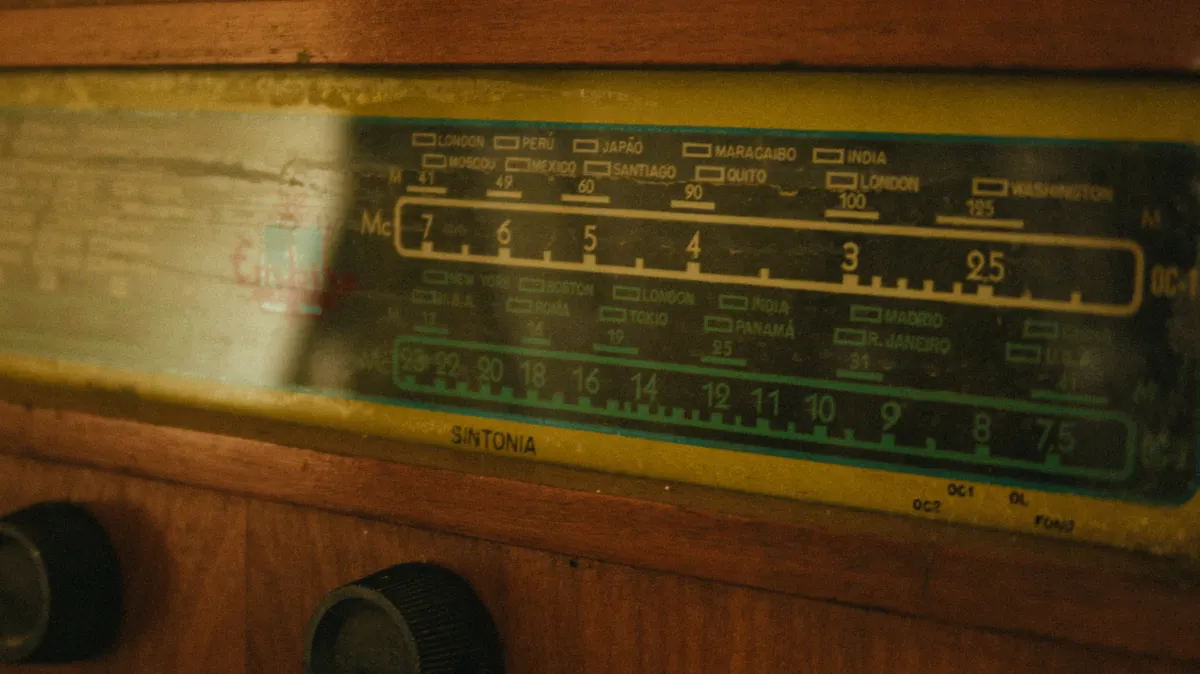
An ATtiny DCF77 decoder project by kwolf1909 is a timely reminder that precision timekeeping across Europe does not demand a processor with any particular muscle behind it. Taking a DCF77 bitstream from a receiver module and displaying the result on an I2C screen, the build is compact, focused, and thoroughly charming in the way that the best small microcontroller projects tend to be.
A Signal That Has Been Keeping Europe on Time Since 1959
DCF77 is a German VLF transmitting station broadcasting a time signal across Europe on 77.5 kHz. The signal carries timing information in a simple, low-speed digital format, which is precisely why those “Radio controlled” labels appear on clocks across the continent. According to TimeTools Ltd, the DCF-77 transmission has been in continuous operation since 1959, making it one of the longer-running time signal services in the world. The station is operated by Physikalisch-Technische Bundesanstalt, Germany’s national metrology institute, and the signal reaches well into neighbouring countries under normal propagation conditions.
The format is deliberately approachable. Data is encoded at a slow, methodical rate, and even modest hardware can decode it without breaking a sweat. That low-speed digital modulation is part of what made DCF77 receivers so widespread in consumer clocks for decades, and it is exactly what makes a tiny 8-bit microcontroller a perfectly reasonable choice for handling the job today.
The ATtiny DCF77 Decoder Project in Detail
Kwolf1909’s build, hosted on Hackaday.io, takes that bitstream and outputs the decoded time to an I2C display. The receiver itself is not part of the project, though as the builder notes, a single-frequency longwave receiver is not a particularly demanding thing to construct. The interface is deliberately minimal: a single push-button. A short press cycles between display modes, while a long press triggers a DCF77 reset. That is the entirety of the user interaction, and it is entirely sufficient.
The design also supports an external temperature sensor and a real time clock module, provided you are working with a variant of the ATtiny that offers enough pins. That conditional is worth paying attention to, because the ATtiny family spans a range of pin counts and memory configurations, and choosing the right member of that family for a given project is part of the craft. The core decoder logic, however, runs comfortably on even the smaller devices in the range.
There is something genuinely satisfying about a build like this. The ATtiny occupies a specific and well-loved corner of the microcontroller world: small enough to fit almost anywhere, cheap enough to use without anxiety, and just capable enough to handle a surprising range of tasks. Decoding a 77.5 kHz time signal that has been broadcasting without interruption since 1959 sits well within that range, and the pairing of a decades-old analogue transmission standard with a tiny digital device feels entirely appropriate.
Not every project needs a 32-bit processor running a full networking stack. The ATtiny DCF77 decoder project makes that point without labouring it, by simply existing and working. A push-button, an I2C display, a bitstream input, and enough code to make sense of it all: the elegance is in what has been left out.
If the signal itself interests you as much as the decoder, the project description points to a previous deep dive into the DCF77 signal format and its encoding, which is worth reading before you commit resistors to stripboard. The DCF77 signal’s longevity and reliability, backed by continuous operation since 1959, means there is plenty of accumulated documentation to work from.
