


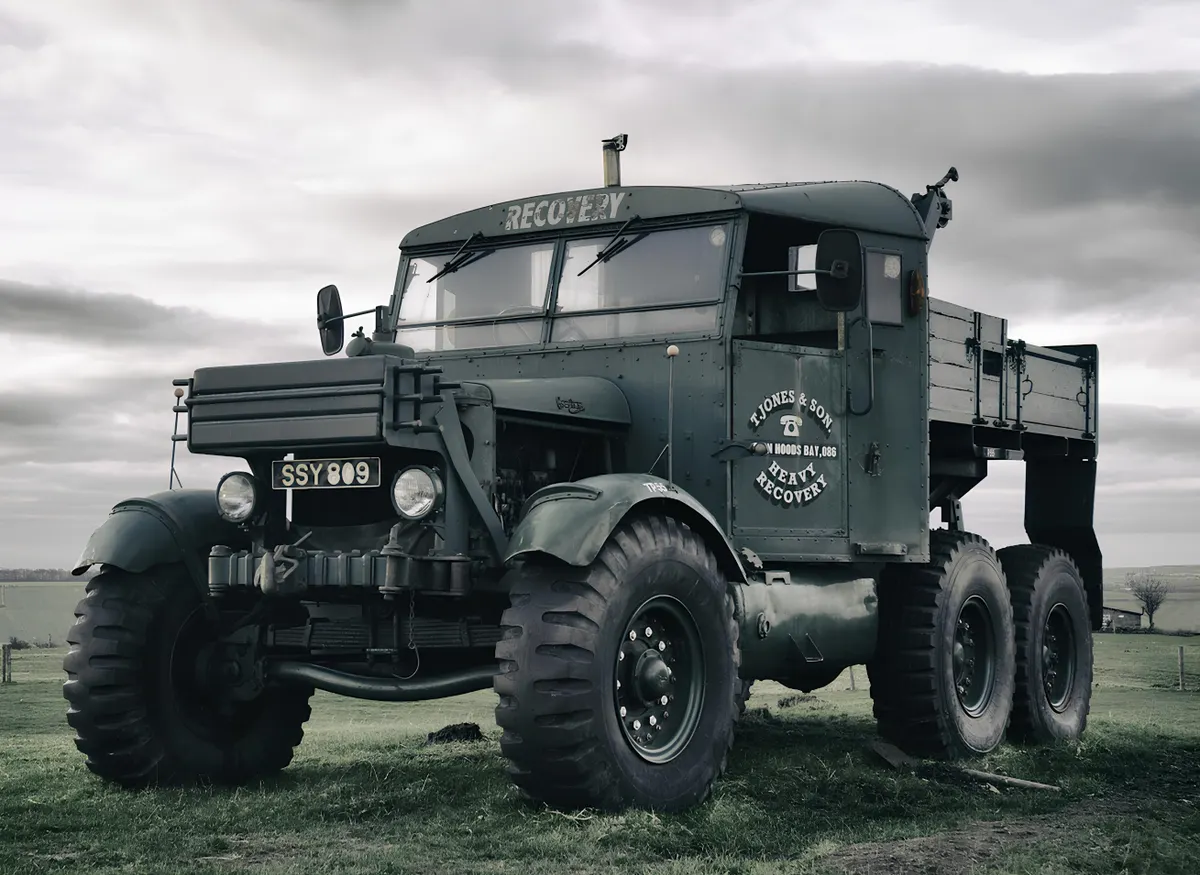
A Foden steam wagon restoration that began with a field find in Buckinghamshire in 1975 formed the centrepiece of a talk at the recent Electromagnetic Field (EMF) Camp event in the UK, where James Hervey-Bathurst walked an audience through every stage of bringing a long-abandoned steam lorry back to working life.
The 1928 6 Ton Wagon That Waited in a Field
According to the EMF Camp schedule, the vehicle in question is a 1928 6 ton Foden steam wagon, a type that was already receding from British roads by the time the internal combustion lorry had fully taken hold. Finding one still intact enough to restore, even in a field, was a stroke of fortune that fewer and fewer enthusiasts could hope to repeat as the 1970s wore on. Hervey-Bathurst retrieved it and set about a long process of rebuilding that would eventually see it return to the road.
The talk opens with the retrieval itself (always the most logistically fraught part of any field-find project) before moving through the mechanical rebuild and culminating in the wagon’s first run. For anyone who has spent time with elderly machinery, the sequence will feel familiar: assess, source, fabricate, test, and discover what you missed the first time around.
Double-Expansion Engines and Exhaust Steam Heaters
What makes the talk genuinely useful as a technical document is the depth at which Hervey-Bathurst covers the wagon’s engineering. The Foden’s double-expansion compound engine gets a thorough explanation, as does its three-speed gearbox, a detail that surprises people who assume steam vehicles were mechanically simple. Steam injectors, the elegant thermodynamic devices that feed water back into a boiler using the energy of the steam itself, are covered too.
Particularly curious is the wagon’s exhaust steam heater, a system designed to condense or recirculate exhaust steam and reduce the billowing white clouds that would otherwise follow the vehicle down every lane. On a working steam wagon, visible steam is partly a practical problem (obscuring the driver’s view and advertising the vehicle’s thirst for water) so the engineering put into minimising it reflects real operational concerns rather than mere aesthetics.
For most viewers, this level of mechanical detail on a 1920s steam vehicle is not easily found elsewhere. The Foden steam wagon restoration talk functions as an informal technical primer as much as a personal story.
Eastnor Castle and the Space to Work
EMF Camp uses Eastnor Castle as its venue, and the connection is direct: Hervey-Bathurst is the castle’s owner. Heritage Explore records that he took on Eastnor Castle in 1988, meaning the restoration itself preceded his tenure there. The Buckinghamshire work of the late 1970s happened before the Herefordshire estate entered the picture, though anyone who has seen the castle’s grounds will appreciate that subsequent storage and running of a 6 ton steam wagon would present rather fewer problems than it might for the average back-garden restorer.
Having access to space is one of the quiet determinants of whether a restoration project survives its own ambition. A vehicle of this size and complexity needs room to be disassembled, room to machine or fabricate parts, and eventually room to move under its own power without immediately meeting a hedge.
A Closer Look at Foden Steam Wagon History
Foden built steam wagons from the 1880s through to the early 1930s, when the firm pivoted to diesel lorries and the era of the working steam wagon effectively closed. The 1928 Foden steam wagon that Hervey-Bathurst restored sits right at the tail end of that commercial history, built when the writing was already on the wall for steam haulage but the engineering had reached a late peak of refinement. The compound engine, the multi-speed gearbox, the exhaust heat management, these are the features of a mature technology, not a primitive one.
The full talk was recorded at EMF Camp and is available via the EMF Camp schedule listing, which gives the complete video for anyone who wants to follow the Foden steam wagon restoration from field retrieval through to that first run under steam.
