


The Yoniq Duo dual-screen handheld is the new device from a company with serious manufacturing weight behind it, arriving in the retro emulation scene not as a bedroom project but as a well-funded entrant planning a public debut at Gamescom in Cologne, Germany.
Yoniq reached out directly to share details of the Duo, describing it as ‘a high-definition dual-screen design with 4× pixel-perfect scaling and a built-in physical stylus, recreating the interaction of classic dual-screen handhelds.’ The company says it ‘combines retro charm with modern technology, allowing players to rediscover the authentic dual-screen experience in a contemporary form.’ It is a compact pitch, and the specification sheet remains thin for now, but what is there tells you quite a lot about the target audience.
What the Yoniq Duo Dual-Screen Handheld Is Actually Aiming For
That 4× pixel-perfect scaling figure is a familiar one in the handheld emulation space. It has appeared previously in devices such as the KONKR Pocket Advance, where it is applied to Game Boy Advance output, and the maths points toward a likely display resolution of 960×640 per screen. Whether Yoniq is targeting the same output format remains unconfirmed, but the framing strongly suggests GBA-era content is central to the proposition.
The stylus, however, is the detail that sets the Duo apart from almost everything else currently available. A physical, stowed stylus on a retro handheld is not something the emulation scene has seen done properly, and its inclusion signals a clear intention to handle Nintendo DS titles with the accuracy those games demand. Stylus-based DS games are notoriously awkward on touch-glass overlays and capacitive screens, a proper physical stylus changes that calculus entirely, and for anyone who has tried to play Phantom Hourglass on a device without one, the appeal is obvious.
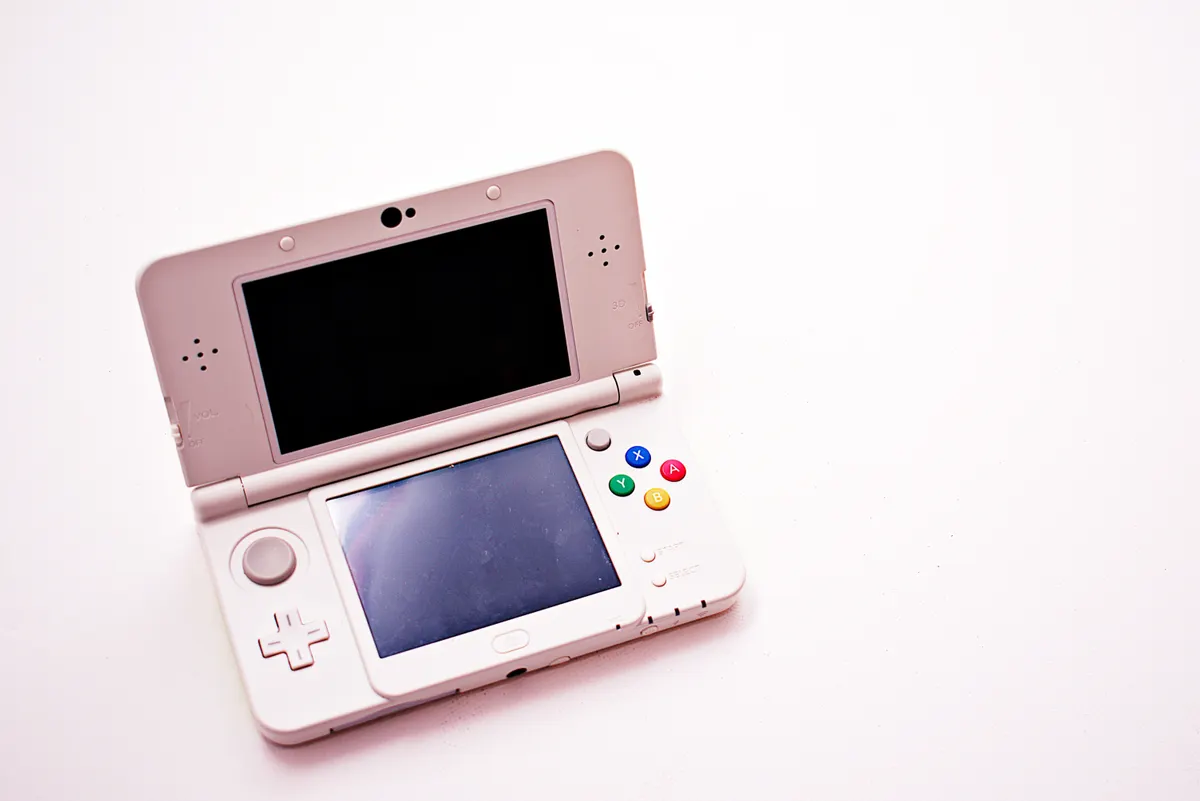
The single image shared so far shows a device that draws visual comparisons to the Anbernic RG DS, though with colour face buttons, analogue sticks, a USB-C port, front-facing speakers and notably small bezels. A closer look at the screen in that image reveals the text ‘PS9’, which suggests strongly that this is an early-stage render rather than a finished unit. That is not unusual at this point in a product’s development, but it is worth keeping in mind when weighing how close to final the design actually is.
The Company Behind It: Manufacturing History and the Pantas Platform
What gives Yoniq more credibility than the average handheld start-up is its background in manufacturing. According to the company, it operates a business in China valued at over $50,000,000 USD that has worked with over 500 gaming brands and is supported by one of China’s leading gaming-accessory manufacturers. That kind of supply chain infrastructure makes the difference between a promising render and something that actually reaches consumers at a competitive price point.
Underpinning all of Yoniq’s devices is a platform it calls Pantas, described as an open ecosystem comprising an operating system, a game launcher and something referred to as the ‘Pantas Bridge’. The platform is designed to connect across smartphones, computers, set-top boxes and handheld devices within a unified gaming ecosystem, with cross-device library management and synchronised save data. The ambition there is broader than most retro handhelds bother with, though how well Pantas functions in practice remains to be seen once hardware is in hand.
Yoniq will be present at Gamescom this year at Hall 10.1, Booth C-052G, and that is where the picture should sharpen considerably. According to IXBT Games, Gamescom 2026 opens on 26 August, meaning the first real hands-on impressions of the Yoniq Duo dual-screen handheld from the show floor are imminent. Pricing, full specifications and a confirmed release window should all follow shortly from there.
